Not all driveways are created equal. And if you’re planning paver installation in San Jose, San Mateo, or Redwood City, it’s important to understand that layout isn’t just about looks; it affects how your driveway performs under weight, weather, and time.
Some paver patterns are engineered for strength. Others are designed to create visual rhythm or fit a certain architectural style. But once you factor in daily vehicle traffic, turning radius, and potential slope, the pattern you choose begins to influence how long your surface holds up.
And for homeowners balancing both driveways and yard areas, pavers often pair seamlessly with low-maintenance options like artificial turf installation. The combination delivers structure where it’s needed and green appeal where irrigation is limited.
Below, we’ll walk through the most common paver patterns used in Bay Area driveways, including what they offer, where they’re best applied, and what pitfalls to avoid.
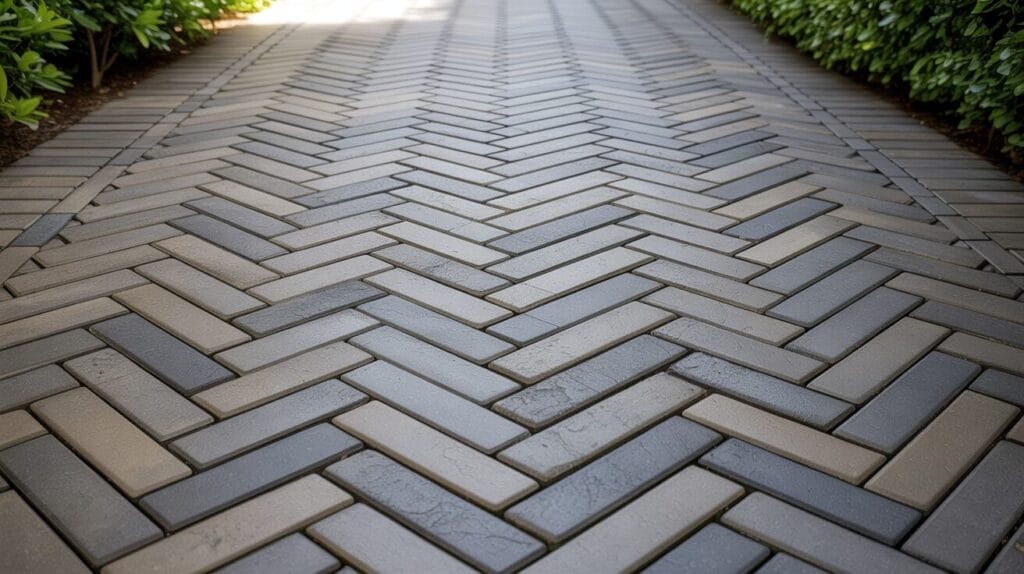
Herringbone Pattern (45° or 90°)
This is the go-to choice for most paver installation projects in vehicle areas, particularly where movement and load are constant. The herringbone pattern creates one of the strongest interlocks available, distributing stress across joints and preventing displacement.
- Best-in-class for load distribution
- Excellent resistance to movement over time
- Works with standard rectangular pavers
- Slightly more labor-intensive, especially at 45-degree cuts
If your driveway sees frequent use or you’re working with a slope—as is common in many parts of Redwood City and San Mateo—this pattern delivers both durability and timeless appeal. Framed with a clean border, it also elevates curb appeal.
Running Bond Pattern
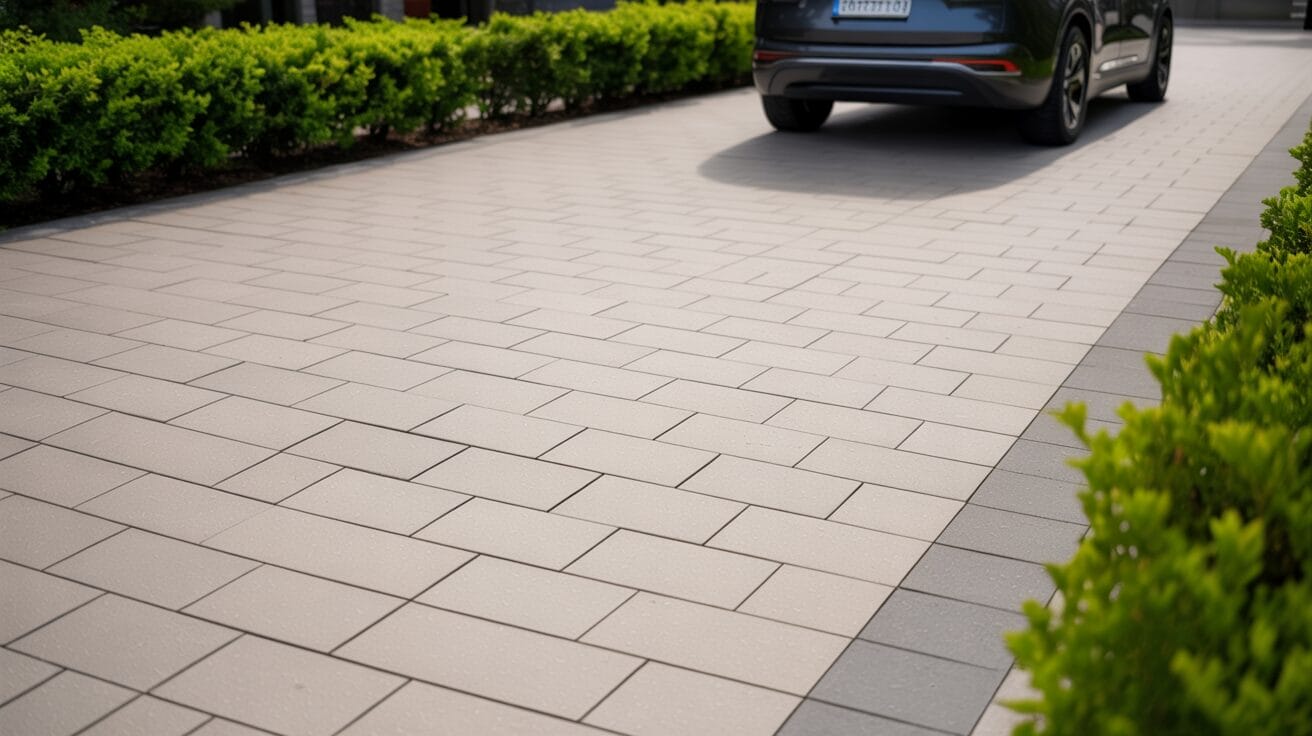
Often requested in paver installation projects across the Bay Area, this layout features staggered lines and is quick to install. While not the strongest under vehicle pressure, it’s ideal for straightforward driveways with predictable traffic.
- Faster and more affordable to install
- Best for flat, narrow driveways or side spurs
- Requires edge restraints to prevent lateral movement
- Can be blended with border patterns for extra structure
Running bond is practical, clean, and cost-effective. However, it’s important to work with a contractor who reinforces the perimeter properly, especially on wider surfaces.
Basketweave Pattern
Basketweave is all about visual character. It evokes a sense of tradition and craftsmanship, making it a frequent choice in neighborhoods with historic or classic architecture. Homeowners in San Mateo and Redwood City often use this pattern to create a period-correct feel without covering the entire driveway. It’s best as an accent or paired with stronger field patterns.
- Vintage, established appearance
- Minimal interlock; not ideal for vehicle-heavy zones
- Can be used in sections with a reinforced base
- Works well on aprons, transitions, or walkways
Some homeowners even frame basketweave aprons with artificial turf, creating a vintage-meets-modern contrast that saves water while preserving design character.
Stack Bond Pattern
Used primarily in contemporary design, stack bond aligns every joint in a tight grid. It’s minimalist, but also the most fragile under pressure. If you’re considering paver installation in San Jose for a driveway with stack bond, be sure the installer reinforces the base and limits the use of this pattern to areas with lower traffic intensity.
Some of the main characteristics of the Stack Bond Pattern are:
- Clean, geometric layout
- Minimal interlock = weaker structural performance
- Best with large-format pavers and expert base prep
- Edge restraints are essential
Modular or Ashlar Patterns
This layout blends pavers of different sizes in a repeating or non-repeating pattern. The effect is dynamic, upscale, and versatile for both modern and traditional properties.
- Strong interlock when installed to ICPI specs
- Great for long or wide driveways
- Disguises wear and surface irregularities over time
- Requires advanced planning and skilled layout
Modular designs are popular in custom paver installations in Redwood City, where property owners want both function and artistry. When paired with the right materials and edging, the results are visually seamless. Westack Landscaping frequently works with homeowners in the area to create tailored modular layouts that balance curb appeal with long-term performance.
Circular or Fan Patterns
Typically used in entryways or as driveway accents, these patterns make an impression. They’re complex to install but add character that few other patterns can match.
- Best suited for inlays or decorative zones
- High-precision cutting required
- Often combined with herringbone or ashlar in the main field
- Strong visual appeal when used in moderation
In San Mateo, where driveway slope and shape often vary, circular patterns can help break up long visual lines or emphasize central features like planters or lighting columns.
Details That Matter No Matter the Pattern
A good pattern can still fail if the fundamentals aren’t in place. Here’s what supports every successful paver driveway behind the scenes:
- Base Prep: According to industry standards, base layers must be compacted in lifts—usually Class II road base or ¾” aggregate
- Paver Thickness: Driveway pavers should be at least 60mm thick; 80mm is recommended for frequent or heavy vehicle use
- Edge Restraints: These prevent lateral shift and should be secured with spikes or embedded into a concrete toe
- Joint Stabilization: Polymeric sand between pavers helps lock units in place and prevents weed growth
- Slope and Drainage: Every driveway should be built with a minimum 2% slope to shed water safely away from the home
- Sealing (Optional): A good sealant can reduce surface wear, resist staining, and enhance color, but it’s not always necessary
Pairing Pavers with Artificial Turf
Driveway pavers don’t have to stand alone. Many Bay Area homeowners now integrate strips of artificial turf between bands of stone, both for visual softness and for long-term water savings. Whether it’s artificial turf installation in San Jose or San Mateo, turf + pavers creates a clean, durable, and low-maintenance finish.
Driveway Pavers
Whether you’re going with a clean-lined stack bond or a deeply interlocked herringbone, the right choice depends on how you use your driveway, what kind of curb appeal you want, and how much durability you expect.
Design is part of it. But it’s the combination of layout, materials, and site prep that determines whether a driveway stays smooth and stable or starts to fail within a few years.
If you’re exploring layout options or want help tailoring a design to your property’s slope, traffic, and use, the team at Westack Landscaping can walk you through what works and what to avoid before installation even begins.


