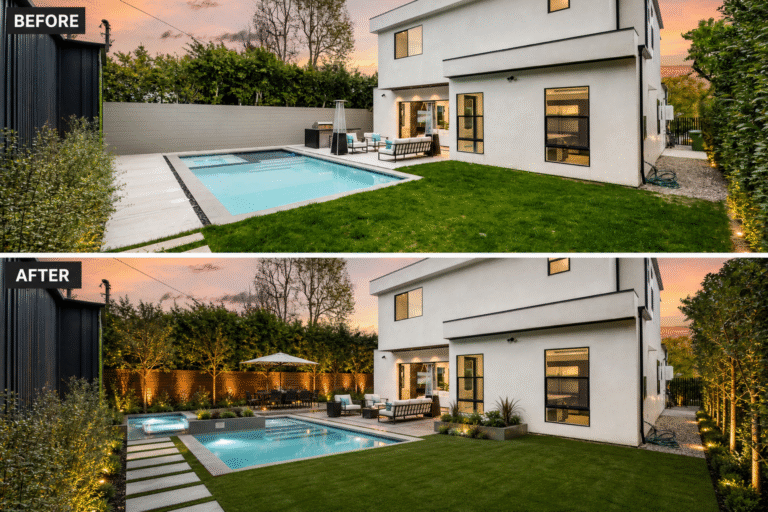

Installing a patio sounds simple until you start weighing your options. It’s not just about picking a color or texture. The type of pavers you choose, and more importantly, how they’re installed, can completely shape how your patio performs over time.
In San Mateo, things like soil movement, backyard slope, and even neighborhood runoff patterns can vary street by street. That’s why patio work takes more than good taste. It takes planning, precision, and experience.
Here’s the deal:
- The wrong paver? It might crack under stress.
- A rushed base prep? You’ll see uneven settling in less than a year.
- Poor drainage? Now you’ve got puddles, and possibly damage near your foundation. So, before hiring anyone or buying materials, take a moment to think bigger than surface-level choices.
What Makes a Patio Last in San Mateo?
A patio that holds up visually and structurally comes down to three things:
- Use Case: Are you hosting weekend BBQs or parking a car on it?
- Drainage Needs: Does the yard already hold water after a storm?
- Local Code: Will the new patio slope correctly and meet city guidelines?
These are the kinds of questions most homeowners don’t think to ask. And honestly, they shouldn’t have to, because that’s the contractor’s job. A solid patio begins with someone who knows how to evaluate the site, prep the ground, and match the materials to how the space will be used.
What Happens During a Paver Installation?
If you’ve ever seen a stack of pavers delivered to someone’s yard and thought, “Oh, that looks easy,” here’s a peek at what goes into getting those stones to sit perfectly and stay there.
A typical install includes:
- Site Evaluation: Checking slope, soil condition, and access to the work area
- Digging Out: Removing the topsoil (usually 6–12 inches deep)
- Laying the Foundation: Compacting crushed gravel or Class II road base in layers
- Installing Edge Restraints: Holding the perimeter tight so pavers don’t shift
- Bedding Sand: Screeding a 1-inch layer to level the pavers before placement
- Laying the Pattern: Interlocking the pavers by hand, often in herringbone or linear rows
That’s before joint sanding and compaction even begin. At Westack Landscaping, this process is second nature. Every step follows California construction codes and professional installation standards. Because a beautiful patio is engineered.
Why Cutting Corners on Pavers Costs You Later
What goes wrong when the work isn’t done right?
- Pavers shift and sink if the base isn’t compacted in lifts
- Water pools in corners when the slope is off
- Edges break apart if restraints aren’t installed
- Unsealed joints lead to weed growth or ant infestations
- Thin pavers crack or chip under pressure
- Worst of all? If the contractor isn’t licensed and something fails, you’re left to fix it—on your dime
In California, any project over $500 must legally be completed by a licensed contractor. That license protects the homeowner. And when it’s paired with insurance and bonding, it also ensures the job is done safely and to code.
Westack Landscaping holds License #1130423, and every project we take on is bonded, insured, and backed by experience. We’ve earned a name in San Mateo for doing things the right way.
Which Paver Type Works Best for You?

Every yard is different. What works on a sloped hillside in Hillsborough won’t always make sense in a flat suburban lot near San Mateo Village.
A few reliable options:
- Concrete Pavers – Affordable, customizable, and ideal for patios
- Natural Stone (Flagstone, Slate, Travertine) – Premium look, higher cost, more complex install
- Clay Brick Pavers – Great for vintage appeal, requires extra attention to level
- Permeable Pavers – Help reduce runoff, ideal for stormwater management
For San Mateo’s climate, freeze-thaw durability isn’t as critical, but drainage absolutely is. And pavers often look their best when combined with other features: lighting, turf inlays, or custom retaining walls.
Many Bay Area homeowners also blend patios with artificial turf installation, creating seamless indoor-outdoor spaces that look polished and require little upkeep. For smaller urban backyards in San Mateo, artificial turf has become a popular complement to paver patios. It keeps the look clean, cuts maintenance, and works especially well in areas where natural grass struggles with drainage or shade.
Westack Landscaping helps clients pair pavers with practical upgrades—like irrigation, LED lighting, or synthetic grass strips—to get the most out of every square foot.
Questions Worth Asking Before You Hire
You don’t need to be an expert in base compaction or ASTM standards. But the person you hire should be.
Before you sign any contract, ask:
- Are you licensed and bonded for paver installation in California?
- What’s your typical base depth?
- Do you compact in layers or all at once?
- Have you done projects in San Mateo before?
- Can you explain your warranty?
These aren’t trick questions—they’re the basics of good, legal, and safe outdoor construction.
Artificial Turf + Pavers: A Low-Maintenance Combo
A patio doesn’t need to stop at stone. Many San Mateo and San Jose homeowners are now combining pavers with artificial turf bands, accents, or full yard replacements. With artificial turf installation in San Jose, large patios gain green space without irrigation demands. In more dense areas like San Mateo, artificial turf adds curb appeal and a finished look without the upkeep of a traditional lawn.
Final Thought: Build It Once, Build It Right
The truth is, paver patios don’t fail because of the pavers—they fail because of what’s underneath. Choosing the right materials matters. But choosing the right team matters more.
In the end, a patio is more than just something to look at; it’s something to live on.