
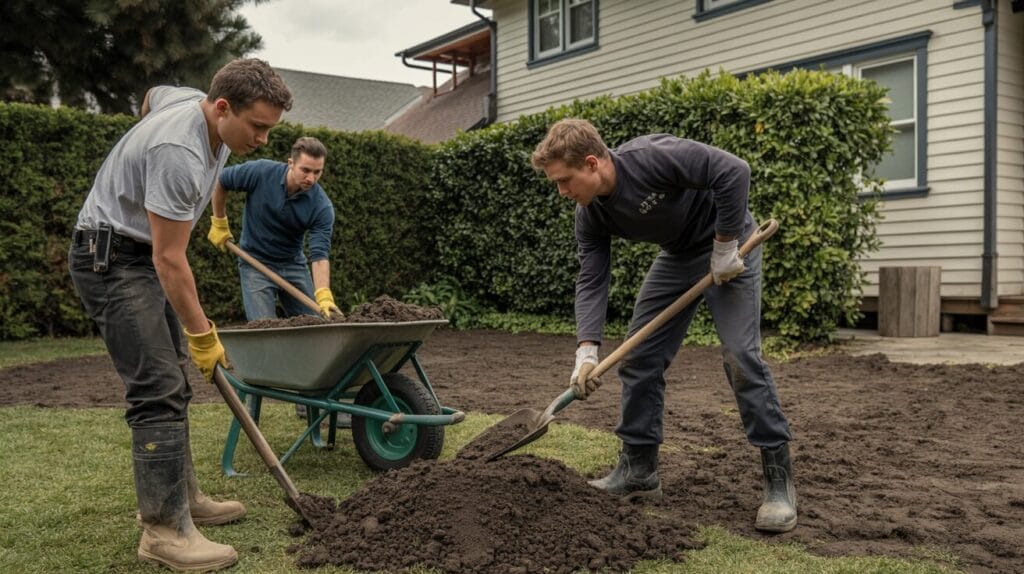
Anyone can go pick out pavers. The hard part — the part that decides if your patio or driveway lasts five years or twenty — is what happens underneath. Ask around San Mateo and you’ll see it: patios that sink, driveways with weeds poking through, walkways that shift and turn into trip hazards. Nine times out of ten, the stones aren’t the problem. The prep work was.
If you’re thinking about putting in pavers here in San Mateo, here’s what goes into doing it right before the first brick or stone ever gets set.
Preparation Is the Real Investment
Pavers are strong, sure. But without the right foundation, even the best material won’t hold up. Clay-heavy soil in San Mateo swells when it rains and cracks when it dries. Combine that with the city’s stormwater rules and sloping lots, and you’ve got conditions that punish lazy prep.
Do the groundwork properly, and you’ll have a driveway, patio, or pool deck that adds value instead of draining your wallet later. Skip steps, and you’ll be calling someone to tear it out and redo it.
Step 1: Take Stock of the Yard
Start by walking the space. Measure the area. Spray paint an outline. Think about how water moves through it — where does it pool after a good rain? In neighborhoods near El Camino, drainage can be tricky because of flat grades. On the west side, closer to the hills, slopes come into play.
Checking soil matters too. San Mateo’s clay requires more excavation and compaction than looser soil. Some homeowners don’t catch this until their patio starts buckling. Planning now saves repair costs later.
Step 2: Clear It All Out
Grass, roots, and debris have no business under pavers. They decompose, leaving gaps that make the surface sag. Strip it down to bare dirt.
Then comes the dig. Depth depends on use:
- Patios and walkways usually need about 7–9 inches.
- Driveways take more — often 10–12 inches.
A big mistake people make is digging just enough for the stone and a thin layer of sand. That shortcut guarantees movement. Go deeper, build the layers right, and the surface stays level.
Step 3: Build the Base

Here’s the part no one sees but everyone notices if it’s done wrong. The base is what keeps the surface solid.
- Crushed rock first: Spread 3–4 inches at a time, compact it tight with a plate compactor, then repeat. For San Mateo clay, this crushed rock lets water move through instead of pooling.
- Density counts: Commercial jobs often aim for 95% compaction. For a homeowner, the rule of thumb is simple: keep compacting until the ground doesn’t move under your feet.
- Sand layer: Once the rock is in, add a thin layer of bedding sand, usually about an inch. Any thicker and the pavers will shift when weight hits them.
This step is where DIY projects usually fall short. Without proper compaction, the surface starts to wave within months.
Step 4: Mind the Drainage
Water is the silent killer of paver jobs. If it doesn’t drain right, you’ll get stains, weeds, and shifting.
Rule of thumb: slope the surface about 1/8 inch per foot, away from the house. It doesn’t sound like much, but it makes all the difference.
In San Mateo, you’ve also got to think about stormwater rules. Permeable pavers, which let water filter through, are sometimes a smart choice, especially if the property sits near a drainage zone.
Step 5: Lock the Edges

Pavers don’t just sit there by themselves. Without something to hold them in, they’ll spread out over time. That’s where edge restraints come in.
- Plastic edges work fine for light use, like garden paths.
- Metal or concrete restraints are stronger and are a better pick for driveways.
Skip this, and within a year, the edge stones start drifting, and weeds creep in.
Why Pros Make the Difference

Could you tackle all this yourself? Maybe. But here’s the truth: if your base is an inch too thin or your slope goes the wrong way, the repair costs will double what you saved.
At Westack Landscaping, we’ve been handling San Mateo installs long enough to know the quirks of the soil, the slopes, and the city’s inspection process. We use pro-grade compactors, laser levels for slope accuracy, and only premium materials. Every project is licensed (#1130423), bonded, and insured — meaning your investment is protected.
The result isn’t just a nice-looking patio or driveway. It stays solid for the long haul, with drainage and grading done right from day one.
Ready to Lay Pavers? Let’s Talk
If you’re in San Mateo and thinking about upgrading your outdoor space with pavers, start with the prep. That’s where the real value is.
Westack Landscaping handles everything from design to excavation, base prep, and installation.


