Landscaping is often seen as a simple upgrade—laying down some sod, putting in a patio, maybe planting a few shrubs. But in reality, transforming a yard into a functional outdoor space is a highly technical process. It involves engineering, soil science, drainage planning, and construction methods that go far beyond weekend DIY.
For homeowners in Redwood City, where clay soils, coastal weather, and strict water regulations all come into play, the difference between amateur work and professional landscaping is night and day. At Westack Landscaping, our process is designed to build outdoor spaces that are not only beautiful on day one but engineered to last for years.
Why Professional Landscaping Matters
Landscaping isn’t just about looks. A well-built yard solves drainage problems, prevents erosion, reduces water waste, and creates spaces designed around how a family actually uses them.
Most DIY or cut-rate jobs fail because of overlooked details:
- Improper grading leads to pooling water or erosion.
- Shallow bases under pavers cause sinking and cracking.
- Incorrect turf installation leads to odors, poor drainage, or seams coming apart.
- Lack of permits results in code violations and expensive corrections.
When you hire a professional team like Westack, you’re paying for knowledge, equipment, and proven methods that safeguard your investment.
Step 1 – Site Evaluation and Planning
Every project starts with understanding the site. Redwood City’s mix of heavy clay and sandy soils requires careful testing before excavation begins. Clay expands when wet and contracts when dry, while sandy loam shifts more easily under pressure.
Our crews perform:
- Soil analysis to determine compaction needs.
- Slope checks with laser levels to plan for water runoff.
- Drainage mapping to identify where water will collect during winter storms.
This phase is also when design discussions happen. Instead of guessing, we plan around how the space will function: whether it’s a patio for entertaining, a turf play area for kids, or a full backyard remodel combining multiple elements.
Step 2 – Demolition and Grading
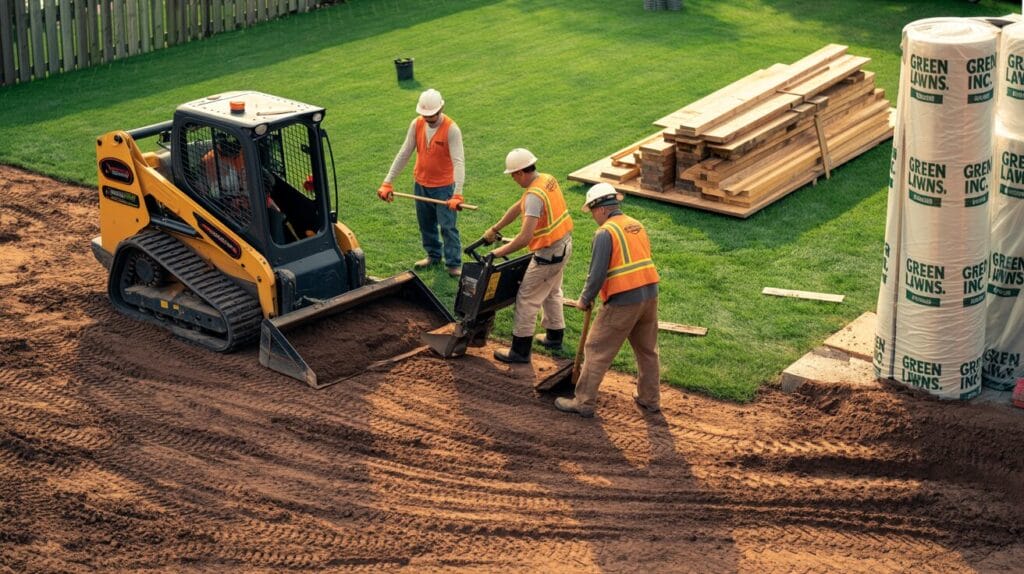
Before new work goes in, the old has to come out. That means removing patchy lawns, cracked concrete, or outdated hardscape. For paver patios, we excavate to a depth that accounts for both the paver thickness and the compacted base beneath it.
We use heavy-duty equipment like skid steers and demo saws to do this quickly and safely. DIY approaches often stop short—digging only a few inches or leaving organic material behind. That shortcut leads to settling and failure within months.
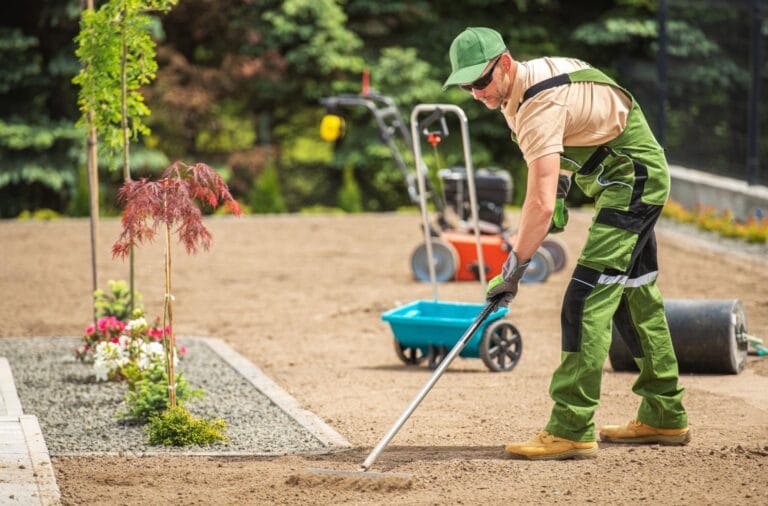
Once cleared, grading begins. The land is reshaped to establish the proper slope—generally about 2% away from the house (a quarter-inch drop per foot). This step ensures rainwater and irrigation flow away instead of pooling.
Step 3 – Drainage and Irrigation Systems
Good landscaping manages water as much as it manages plants or stone. In Redwood City, where winters can bring sudden heavy rain, we often install:
- French drains or perforated pipe systems to carry water away.
- Catch basins to collect runoff in low spots.
- Permeable base materials under patios and turf to allow infiltration.
On the irrigation side, drip lines are often added beneath artificial turf or into planter beds. Smart controllers adjust water schedules based on weather, keeping usage compliant with Bay Area restrictions.
Amateur installations skip these systems, which is why homeowners end up with soggy patches or dead zones that require costly rework.
Step 4 – Hardscaping Foundations
Hardscape—paver patios, walkways, retaining walls—is where the difference between professional and amateur work is most obvious.
A proper foundation consists of:
- Excavation to the right depth (often 6–12 inches, depending on use).
- Layers of crushed aggregate stone, compacted in lifts with plate compactors.
- Edge restraints to prevent lateral movement.
- A one-inch bedding layer of concrete sand, screeded smooth for precise leveling.
Compaction at every stage is vital to achieve load-bearing strength and prevent settling. Tools like plate compactors, screed rails, and geotextile fabrics are essential. Hand-tamped bases or “eyeballed” leveling—common in DIY jobs—simply don’t compare.
Step 5 – Artificial Turf Systems
Artificial turf is one of Westack’s most popular services, especially for families dealing with drought restrictions. But high-quality turf systems are complex:
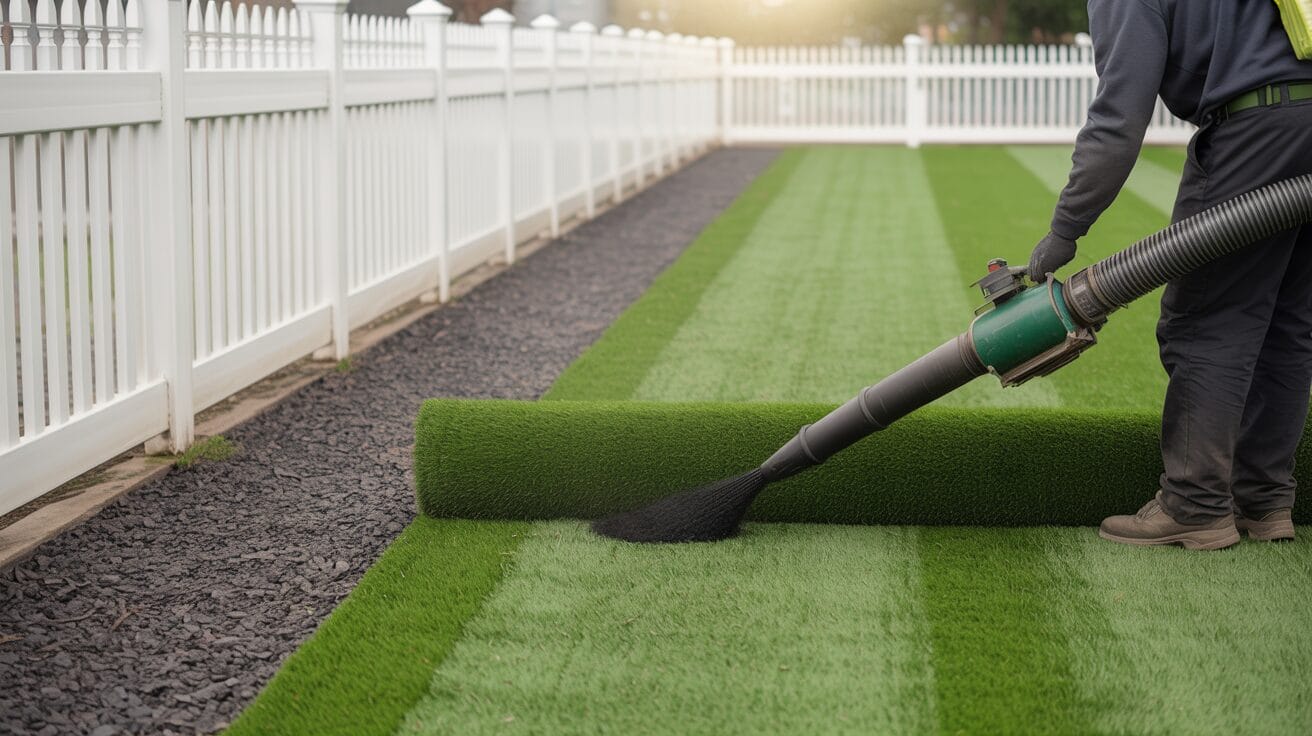
- Base prep: Turf sits on a compacted aggregate sub-base, not bare dirt.
- Drainage layer: Ensures rain passes through quickly, avoiding odor and puddling.
- Seaming and anchoring: Turf is secured with seam tape, adhesives, and nail-down edges to prevent lifting.
- Infill materials: Silica sand, TCool, or antimicrobial infills are brushed into the fibers to add weight, improve cooling, and reduce bacteria.
Cheap installations skip infill or use poor adhesives, which is why seams peel and turf wrinkles within a season. Professional turf work is closer to sports-field engineering than simple yard work.
Step 6 – Finishing Elements
DIY kits may look similar at first glance, but they lack the engineering that ensures safety, durability, and code compliance. Expert landscaping projects often extend beyond turf and pavers. Westack also handles:
- Retaining walls: Built with reinforced footings, drainage backfill, and geogrid reinforcements.
- Fire pits and outdoor kitchens: Constructed with masonry techniques, rebar cages, and concrete bases.
- Lighting systems: Low-voltage wiring integrated into hardscape for ambiance.
Our Proven Process vs Amateur or DIY Options
When homeowners compare quotes, they often wonder why professional landscaping costs more than a DIY weekend project. Here’s the breakdown:
- Knowledge: Westack brings soil science, drainage engineering, and hardscape construction standards to every project.
- Equipment: Commercial-grade compactors, grading machinery, and specialty turf tools—not rental hand tools.
- Compliance: Permits and local codes are followed, avoiding fines or forced removals.
- Longevity: Installations built to ICPI and industry standards last decades, not just a couple of seasons.
- Warranty: Professional work comes backed with accountability; amateur work does not.
When you hire Westack, you’re not just buying turf or pavers. You’re investing in a system designed to perform over the long term.
Why Choose Westack Landscaping in Redwood City
Westack isn’t a franchise with cookie-cutter crews. We’re a locally owned company with a deep understanding of Bay Area soils, climate, and city regulations. Our crews are trained in turf installation methods and drainage solutions tailored to Redwood City conditions.
We provide transparent pricing, clear timelines, and professional results that stand apart from DIY and unlicensed labor. For homeowners, that means peace of mind and a yard that adds value instead of problems.
Ready to Upgrade Your Redwood City Yard?
Landscaping it’s engineering, design, and craftsmanship rolled into one. From the first shovel of soil to the last paver set in place, Westack’s process ensures your outdoor space is functional, durable, and tailored to your lifestyle.
If you’re ready to invest in your home with expert landscaping services in Redwood City, contact Westack Landscaping today. Our team will walk you through the process step by step and deliver a finished space built to last.